Welcome to our blog!

Welcome to our blog! Learn about our farm operation, public programs, and the people behind our work through the Notes from the Field and Education sections. Peruse the Recipes section for some staff favorites.

Waltham Fields Community Farm (incorporated as Community Farms Outreach, Inc.) is a nonprofit farming organization focusing on sustainable food production, fresh food assistance, and on-farm education. For more information about Waltham Fields check out our website!

Sunday, September 5, 2010

Featured Learning Garden Crop: Husk Cherries

Unripe husk cherries (left)


Husk cherries, also know as groundcherries, are fruits of the nightshade family and a close relative of the tomato. They grow in temperate and subtropical regions, fairing well even in poor soils. The fruit is easily recognized by its papery husk, which turns light brown when the fruit is ripe and ready for picking. Ripe husk cherries are creamy yellow to orange in color. Their flavor is reminiscent of tomatoes with a mild tartness.

Husk cherries are a good source of cryptoxanthin, a carotenoid and antioxidant. Cryptoxanthin is converted to retinal, a form of vitamin A necessary for human vision.


Husk cherries are rarely found at the grocery store but may be found at some farmers markets. Don't let limited availability get in the way of trying this fruit. Try growing some for yourself!

The CLG husk cherry patch (above)

Media (text and image) created and published by Rebekah Carter 2010.

Animals at Waltham Fields

There's a first time for everything

Whether garden friend or foe (and sometimes both!), Waltham Fields Community Farm shares the land with numerous creatures, some of which we happened to catch on camera.

Rabbits

What a life! Just another morning at the farm

Grasshoppers

Click on the photo to get a close up of this guy's armor!

Cooper's Hawks (see post, "The Hawk Chows Down")

Ready for takeoff

Toads

Spotted in the gourd patch

And, of course, the farm's resident chickens


Little Red Hen, a favorite amongst the kids

What other animals have you seen at Waltham Fields?

Media (text and image) created and published by Rebekah Carter 2010.

Cooking in the CLG: Curried Vegetables

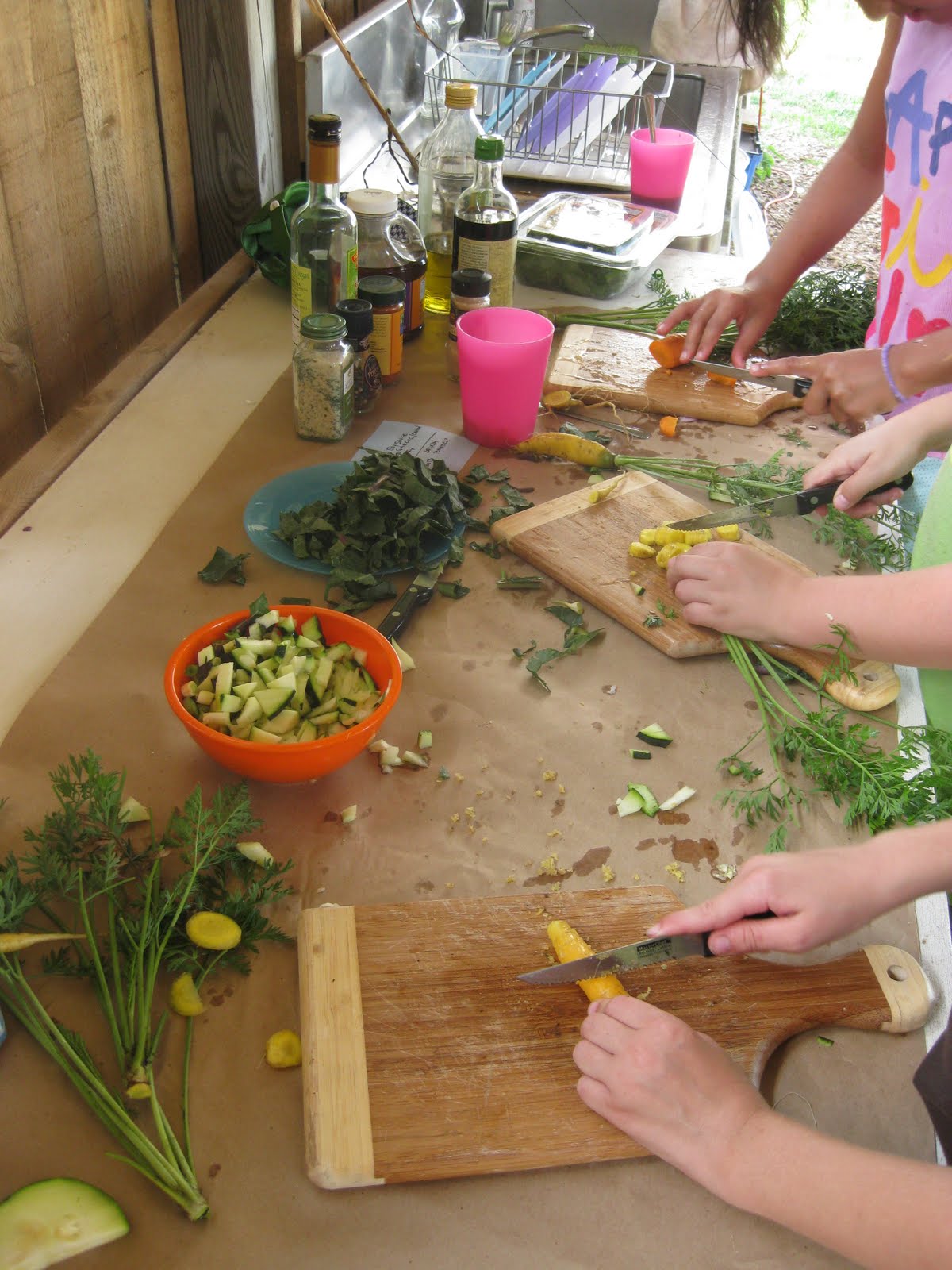
Preparing vegetables for cooking (above)

In trying to encourage kids to sample new fruits and vegetables as well as exotic dishes, we prepared curried vegetables with rice as an example of a healthy meal they could share with the family. Our variation on curry is low-fat, vegan, and gluten-free.

We included the following ingredients in our curry:
Curry on the stove top (below)

Fresh produce:
  • carrots, sliced
  • onion, diced
  • garlic, crushed and minced
  • zucchini, sliced
  • summer squash, sliced
  • kale or Swiss chard, cut into strips
  • chickpeas, canned and rinsed or dry and cooked prior
  • cilantro, chopped
  • thyme, chopped
Curry sauce:
  • Indian curry powder
  • cumin, ground (not whole seed)
  • water
Essential extras:
  • olive oil
  • garlic salt or sea salt
  • cooked brown rice

We first washed and cut/chopped our vegetables and herbs, keeping each item in a separate bowl. Over medium heat, we added our oil, onion, garlic, and fresh herbs (cilantro and thyme) to the pot. As the onions started to become translucent, we added our curry sauce (combine curry powder, cumin, and just enough water to make the mixture a liquid) to the pot and let it simmer for a minute or two. We then added the vegetables in the following order, so as to achieve the best texture for each item: carrots, chickpeas, kale/chard, summer squash and zucchini. Be sure to allow about 5 minutes between each addition; the summer squash and zucchini cook quickly and should be added last. Serve the curry over rice and enjoy!

Due to food sensitivities and taste preferences, we did not make our curry spicy. At home, feel free to liven things up by adding fresh hot peppers (diced) or ginger (crushed and minced) to the pot OR adding powdered ginger, cayenne pepper, or red pepper flakes to the curry sauce. Just be careful when adding spicy ingredients; what may seem like a little can result in a lot of heat!

Media (text and image) created and published by Rebekah Carter 2010.

Quotes to Remember: Summer 2010


While the kids discussed the importance of salt (sodium) in the human diet:

"It's just like a fortune cookie!" Martin

We're not sure of the exact connection Martin made between the essential mineral and fortune cookies, but his moment of enlightenment was something we could all enjoy!

"This is going to be the best year of farm camp EVER!" Sam


And we hope it was!

While peeling and chopping garlic during a cooking activity:

"I wish they made a card that when you scratch it, it smelled like garlic." Owen


We very much appreciated your love of Allium sativum; we'll know who to call when we see garlic-scented cards on store shelves.

Media (text and image) created and published by Rebekah Carter 2010.

Featured Learning Garden Crop: Potatoes

Purple potatoes from a local farm (left)

The potato (Solanum tuberosum) is a starchy perennial tuber of the nightshade family, which also includes edible fruits such as tomatoes, eggplant, and chili peppers.

Originating from the Andes of South America, almost all potato varieties in cultivation today are descendants of Chilean potato species. Potatoes were introduced to Europe in the early 16th century, where they were exported to numerous other territories and became one of the world's largest food staples, only to be outproduced by rice, wheat, and corn.

Potato plants in the CLG (right)

When you look at its nutritional value, it's easy to see why the potato has remained so popular in both traditional and modern cultures! An excellent source of vitamin C and potassium and a good source of several B vitamins and minerals, such as iron, magesium, and phosophorus, potatoes are a great addition to any meal. They are healthy sources of dietary fiber and protein, but due to their high carbohydrate content, should be eaten in moderation.

FACT: The majority of a potato's protein is found in the thin layer directly beneath the skin.

Media (text and image) created and published by Rebekah Carter 2010.

Monday, August 30, 2010

Cooking in the CLG: Salsa Fresca

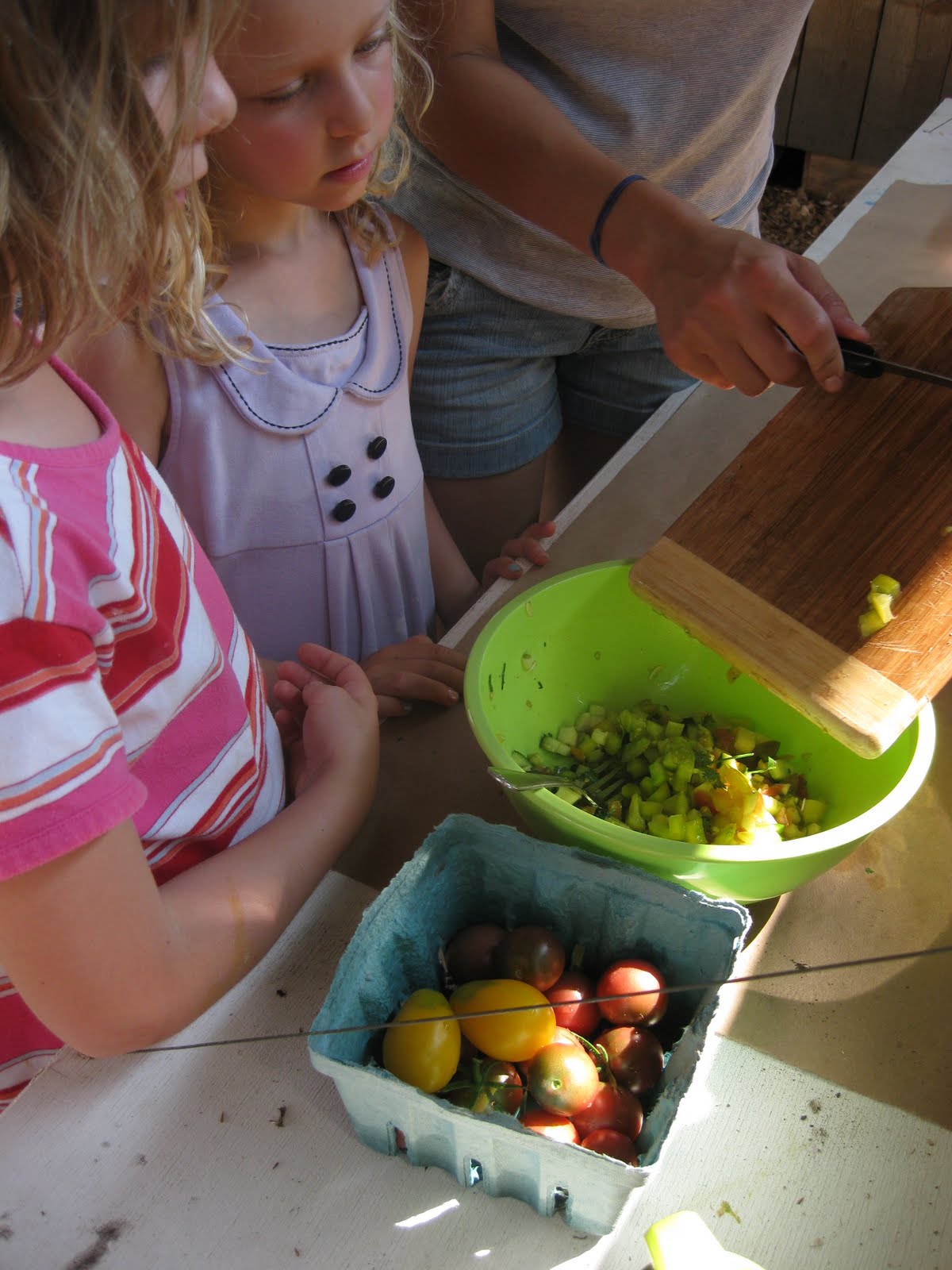
One of our summer program's biggest hits on the snack circuit was our Salsa Fresca! While we encouraged the kids to try cooking new dishes without calculated recipes, these are the ingredients you'll likely want on hand if making the salsa:

Must haves:
  • fresh tomatoes (diced)
  • onion
  • fresh cilantro
  • salt
  • cumin (ground, not whole seed)
  • olive oil
  • your favorite chip or cracker for salsa dipping
Here are some optional additions we used this summer:
  • fresh garlic
  • bell pepper
  • cucumber
  • zucchini (diced or sliced thin for chips!)
  • basil
  • chives or leeks


Media (text and image) created and published by Rebekah Carter 2010.

After the Harvest: Cooking


A key component of our Learning Garden programming is establishing "farm-to-plate" connections between the kids and the food they eat. By working directly in the garden and allowing the kids to cook up their own healthy snacks in our outdoor kitchen, they are better able to understand and appreciate how food is grown, distributed and prepared, as well as its nutritional significance to human health.

All of our snacks are vegan and are mostly free of nuts and seeds. If you have a particular concern about your son or daughter, please contact Jericho (jericho@communityfarms.org) so that we can do our best to accommodate your child's needs.


Media (text and image) created and published by Rebekah Carter 2010.