Every year around this time I start to think about the Marge Piercy poem "To be
of use." "The people I love the best," she says,
"jump into work head first/ without dallying in the shallows..../I love
people who harness themselves, an ox to a heavy cart/ who pull like water
buffalo, with massive patience,/ who strain in the mud and the muck to move
things forward,/ who do what has to be done, again and again." There
is a time in every farming season when the harvest becomes the thing that has
to be done, again and again. You can take a day off from many other farm
tasks, but a day off from harvest, once the season is underway, is an
impossibility. Zucchinis and cucumbers grow huge in the heat, and plants
shut down as the fruits mature. Tomatoes become overripe. Carrots
crowd each other, jostling for more space in the row. As Piercy says,
"the food must come in."
This week, it was hard to do any work. It was too dry in our fields to
plant seeds unless we watered the empty beds first. Fall carrot seeds
germinated and then died in the intense heat at the soil surface. We
transplanted until Wednesday and then stopped, because everything we planted
needed to be watered immediately and we just couldn't keep up. We moved
irrigation pipe. We harvested garlic. We seeded lettuce and spinach
in the greenhouse for September harvest. We moved irrigation pipe
again. We watched more things wilt in the increasing heat as the week
went on. And every day, we harvested.
Every morning, the weed crew showed up on the farm to work. This amazing
crew has hoed and hand-weeded their way around the fields, keeping the
pick-your-own crops pristine and the gnarly onion field under control.
They stood in the shade drinking water more than usual this week, but they were
back out in the field again in a moment, kneeling in the row over and over
again to make sure that the crops were clean. They are the unsung heroes of the
farm, young men and women who spend five mornings a week making sure that our
crops have enough space to grow, which on our particular farm is a monumental
task. We appreciate their work every day when we go into the fields to
harvest and can find the crops. Every day during this heat wave, they
came to work to weed.
Every morning, the field crew showed up to harvest. Even though several
of them jokingly threatened to go on strike, and one of them called our field
in Weston "the Gateway to hell" because of how hot it is over there
with no indoor relief, they came to work every day, to do what had to be done
again and again. They harvested new potatoes in a field where the south
side of the potato hills burned our knees through our work pants. They
harvested beets that wilted even before they were picked. They harvested,
moved crops into the shade, harvested again, at all three of our fields,
through the hottest part of the day.
Every morning, Zannah arrived at Gateways to feed and water the pigs, to make
them a cool mud wallow in the field, to get the harvest crates and knives
ready. Every day, Sutton biked to the farm early and stayed late to
irrigate and fertilize the tomatoes at the Lyman field. Volunteer groups
from Genesis, Whole Foods and Thermo Fisher, led by Kim and Marla, weeded
lettuce, chard, raspberries and tomatoes. Dan cultivated until he had to
stop because he was afraid it was doing too much damage to the crops.
Erinn continued to seed in the greenhouse and in the field. The heat
wave, although it set back plants and wiped us out, did not stop the
harvest. Or the crews. They endured.
On Friday afternoon, there was a point in the day when we all found ourselves
sitting on the ground in the shade behind the barn. We were, beyond all effort
of will, finished working for the day. Dan and Erinn went back to work
the next morning, moving irrigation pipe, hoping for the rain at the front of
the cold front that never came. Monday will be cooler, and Tuesday might
bring rain. For the moment, the heat is over, and the work of the season
continues.
Enjoy the harvest,
Amanda, for the farm crew
Welcome to our blog!
Welcome to our blog! Learn about our farm operation, public programs, and the people behind our work through the Notes from the Field and Education sections. Peruse the Recipes section for some staff favorites.
Waltham Fields Community Farm (incorporated as Community Farms Outreach, Inc.) is a nonprofit farming organization focusing on sustainable food production, fresh food assistance, and on-farm education. For more information about Waltham Fields check out our website!
Showing posts with label farming. Show all posts
Monday, July 22, 2013
Notes from the Field - All Star Break
The short break for baseball is no break on the farm. It's high season, and it always seems to be the week when it's over 90 degrees with no rain in the forecast. Our neighbors to the west and north have been slammed with rain, but the spot thunderstorms that have been popping up in eastern Massachusetts have missed
us so far. The last week when we got over a half inch of rain was back in
mid-June, and we've had less than a quarter inch in total so far this month.
Vegetables need about an inch of water a week to grow the way we'd like them
to. Do the math, and it quickly becomes clear that we've been doing a lot of
irrigating.
As soon as the weed crew finishes a project, we scramble to move the big aluminum irrigation pipes to get water on the newly exposed plants so that they won't expire in the heat. As fast as we can harvest, we move the crops to the wash station to be plunged in cold water and packed in the 38 degree cooler. Zannah and Sutton fire up their pumps throughout the week to keep drip irrigation flowing to the peppers, eggplant, squash, cucumbers, melons and tomatoes at the Lyman and Gateways fields. It's hard weather to work in, but it's good weather for hot-weather crops, if they can get enough water. On the other hand, it is tough weather for crops like chard, lettuce and kale, as well as the broccoli and cauliflower we put in over the last two weeks. Our first planting of greens is suffering in the dry weather, but we're watering the second planting like crazy to try to get it to move along for an August harvest.
The good news is that this upcoming week of hot, dry weather will help keep the late blight that was found inWestern Massachusetts
last week at bay; the organism that causes late blight, a devastating disease
of tomatoes and potatoes, does not thrive in hot weather. Other diseases, like
basil downy mildew, and pests, like onion thrips, Mexican bean beetle, flea
beetle and potato leaf hopper, don't seem to mind the heat. This season, we've
entered into a new relationship with the University of Massachusetts
Extension Service in which they visit us every
two weeks to scout the farm for pest and disease issues and make
recommendations to help us deal with them. As a result, we know a great deal
about all the issues our crops are having this year (onion maggot! cabbage root
maggot! pythium! heat damage followed by alternaria spread by irrigation water!
thrips! tomato fungal disease!) in a season in which we seem to have hit the
jackpot of those issues. Our continuing education in plant pathology and
entomology, while fascinating, is also a little discouraging, since it usually
involves a recommendation to spray one of the two effective insecticides we're
allowed to use as organic growers or to rotate the crop far away from its
current location for many years.
This week also marks the beginning of our Outreach Market in downtown Waltham . The Market, now
in its sixth year, is our most powerful tool for doing the important work for
which the farm was founded -- helping provide access to healthy food for all
people, regardless of income. With the help of donations from our members,
including CSA shareholders, we work with local social service agencies who have
connections with Waltham 's
low-income population to distribute vouchers to their clients for a free bag of
vegetables at the Market. Folks who don't have vouchers can purchase a bag of
vegetables for five dollars, filling it to the brim with their choice of
whatever veggies we have available that week. People who happen by and are
curious about the market get lots of information about the farm and the purpose
of the market -- and if they still feel like they qualify for a five dollar bag
of vegetables, they get one, no questions asked. Thanks to Martha Creedon and
the Waltham Farmers' Market, we can also accept EBT payments for vegetables at
the market. More than $45,000 worth of produce moved through the Outreach
Market last season. It is a project of which we are very proud and to which we
are deeply committed, even in a challenging season.
Weeds, water, diseases, markets, lots of plants waiting to go into the ground -- no, it's no break, it's mid-season. We're hopeful that soon the harvests will take off and we'll have less time to worry -- I mean, think. Until then, we'll enjoy this moment of midsummer when, as Hal Borland wrote, "the beat of time is like the throb of a healthy heart, strong, steady and reassuring...it is the richness and the ripeness of the earth again made manifest. And man participates, if he will, not as proprietor but as a participant in life itself."
As soon as the weed crew finishes a project, we scramble to move the big aluminum irrigation pipes to get water on the newly exposed plants so that they won't expire in the heat. As fast as we can harvest, we move the crops to the wash station to be plunged in cold water and packed in the 38 degree cooler. Zannah and Sutton fire up their pumps throughout the week to keep drip irrigation flowing to the peppers, eggplant, squash, cucumbers, melons and tomatoes at the Lyman and Gateways fields. It's hard weather to work in, but it's good weather for hot-weather crops, if they can get enough water. On the other hand, it is tough weather for crops like chard, lettuce and kale, as well as the broccoli and cauliflower we put in over the last two weeks. Our first planting of greens is suffering in the dry weather, but we're watering the second planting like crazy to try to get it to move along for an August harvest.
The good news is that this upcoming week of hot, dry weather will help keep the late blight that was found in
Weeds, water, diseases, markets, lots of plants waiting to go into the ground -- no, it's no break, it's mid-season. We're hopeful that soon the harvests will take off and we'll have less time to worry -- I mean, think. Until then, we'll enjoy this moment of midsummer when, as Hal Borland wrote, "the beat of time is like the throb of a healthy heart, strong, steady and reassuring...it is the richness and the ripeness of the earth again made manifest. And man participates, if he will, not as proprietor but as a participant in life itself."
Enjoy the harvest,
Amanda, for the farm crew
Sunday, June 23, 2013
Notes from the Field: Too Much of a Good Thing
Plants need water. This is one of those basic lessons you learn in elementary school (or, in the case of my personal houseplants, you keep on learning -- sorry, plants). When it's raining, we don't have to irrigate. When it's raining, we can get other work done.
These are the things we kept telling ourselves last week when it just kept raining. We got six inches of rain between Friday the 7th and Thursday the 13th -- more than in the entire month of May. It rained while we were doing our first harvests, re-learning all the things we knew last season about picking and packing and washing and storing. We got a few beds of okra and lettuce planted in between the showers. We seeded lots of fall broccoli and cauliflower in the greenhouse. All of the other tasks that farmers need to do in June -- cultivating, turning in cover crop, seeding, making beds for crops that need to go in, fertilizing plants that need a little extra after the rain washes it all out, scouting for all the pests and diseases that can pop up in cool, wet weather -- had to wait. Even the weed crew, who just started June 4, had two days when they helped harvest instead of weeding last week as the rain made it too wet to pull weeds in the field.
The trick with the wet weather is the mind games it plays. We know we shouldn't be in the fields when they're that wet. Even the pigs know; they stayed inside their Pig Palace for most of last week. But farmers sitting on their hands in June, when we should be our busiest, makes for some cranky farmers. We should be out killing weeds. We should be out seeding carrots. We should be out plowing in rye and vetch to make room for fall crops. But we can't. And so we wait. And worry. We pace, and complain, and put on the rain gear again, and get used to the ache in the feet from the rain boots that -- let's face it -- just aren't that comfortable, and try to remember all the things that we had on our rainy-day list back when it was sunny and warm.
The wise farmer Dan Kaplan, of Brookfield Farm in Amherst, said of last week "at times like these we try to remember that what is required is a spiritual practice. We can only change what we can change. And for all else, we have to learn acceptance."
By Friday, acceptance came a little easier. We remembered how to deal with wet weather. You put all your plans on the shelf and seed in the greenhouse. You eat a little rhubarb snacking cake (thank you, Lizzie!) and catch up on your paperwork. You settle in to the sound of the drops on the barn roof and greet all the shareholders who don't mind picking herbs in the rain, and enjoy the sight of all the brightly colored rain gear in the fields. You wait for the rain to stop and the sun to come out so that you can check out all the crops, see how things fared, and catch up on everything else.
Enjoy the harvest,
Amanda, for the farm crew
These are the things we kept telling ourselves last week when it just kept raining. We got six inches of rain between Friday the 7th and Thursday the 13th -- more than in the entire month of May. It rained while we were doing our first harvests, re-learning all the things we knew last season about picking and packing and washing and storing. We got a few beds of okra and lettuce planted in between the showers. We seeded lots of fall broccoli and cauliflower in the greenhouse. All of the other tasks that farmers need to do in June -- cultivating, turning in cover crop, seeding, making beds for crops that need to go in, fertilizing plants that need a little extra after the rain washes it all out, scouting for all the pests and diseases that can pop up in cool, wet weather -- had to wait. Even the weed crew, who just started June 4, had two days when they helped harvest instead of weeding last week as the rain made it too wet to pull weeds in the field.
The trick with the wet weather is the mind games it plays. We know we shouldn't be in the fields when they're that wet. Even the pigs know; they stayed inside their Pig Palace for most of last week. But farmers sitting on their hands in June, when we should be our busiest, makes for some cranky farmers. We should be out killing weeds. We should be out seeding carrots. We should be out plowing in rye and vetch to make room for fall crops. But we can't. And so we wait. And worry. We pace, and complain, and put on the rain gear again, and get used to the ache in the feet from the rain boots that -- let's face it -- just aren't that comfortable, and try to remember all the things that we had on our rainy-day list back when it was sunny and warm.
The wise farmer Dan Kaplan, of Brookfield Farm in Amherst, said of last week "at times like these we try to remember that what is required is a spiritual practice. We can only change what we can change. And for all else, we have to learn acceptance."
By Friday, acceptance came a little easier. We remembered how to deal with wet weather. You put all your plans on the shelf and seed in the greenhouse. You eat a little rhubarb snacking cake (thank you, Lizzie!) and catch up on your paperwork. You settle in to the sound of the drops on the barn roof and greet all the shareholders who don't mind picking herbs in the rain, and enjoy the sight of all the brightly colored rain gear in the fields. You wait for the rain to stop and the sun to come out so that you can check out all the crops, see how things fared, and catch up on everything else.
Enjoy the harvest,
Amanda, for the farm crew
Thursday, June 13, 2013
Notes from the Field: June Thoughts
Farming is a funny thing. Here at Waltham Fields, we farm as a team, within the context of a larger nonprofit organization doing work that goes well beyond vegetable production. The winter is the time for all of us to work together on the big organizational issues that we try to work out in advance of the upcoming growing season: how are the parts of our organization integrated? How do we communicate with one another? How can we support each other, financially, programmatically, and emotionally during the busiest parts of our individual seasons? What is the 'big picture' and the future for our farm operation? Our education programs? Our volunteer program? Our organization overall? There are always more of these conversations than we have time for in the winter, so I always smile a little when people ask us what we do in the off-season.
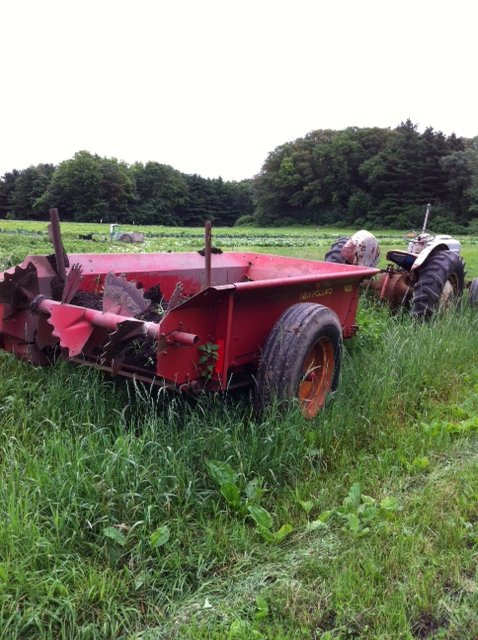
Organizational conversations merge with spreadsheets and seed catalogs as we plan out the farm for the season. Our fertility plan takes shape at this time of year, as we pore over soil tests and recommendations for each crop, then figure out the most cost-effective and (hopefully) sustainable way to deliver what the crops need. We also spend the late winter and early spring doing maintenance on our tractors and other equipment. Dan and Zannah attended a wonderful workshop on small tractor maintenance up at Moraine Farm this spring, and Dan hit the ground running working on our three older tractors like an expert. As a result, they are running... well, I'd better not say any more about that. One of the hats we wear as farmers, a little like baseball players, is the irrational and superstitious.
We built a high tunnel: Erinn was the main carpenter and project manager, while the rest of us tried our best to follow directions. We pounded posts, measured and re-measured diagonals, bolted bows together and lifted them into place, framed endwalls and finally, on a gusty day in March, skinned the house, lifting Dan and Zannah completely off the ground as the giant piece of plastic floated up and over the bows. Then Erinn seeded greens and radishes for Sprout, our spring fundraiser, and sold a few pounds to local restaurants before clearing the field house to re-plant with a variety of trial crops this week.
As the spring progresses, we become plant whisperers. The greenhouse is the main focus of our activity in March, as we remember how to seed each crop under Erinn's expert guidance and with the help of many volunteers who enjoy the warm, sunny greenhouse during the unpredictable weather of spring. What do the plants want? What's the perfect time to seed them? To pot them up? To harden them off and plant them out? At the same time, we seed spring cover crops and begin to turn the fields, preparing beds for the earliest crops (onions, carrots, and beets) with the disk, the chisel, the drop spreader and the basket weeder. We become experts at farm math: in order to apply 10 pounds of 8.3.3 organic fertilizer to a 200-foot bed, we have to drive the little Kubota in 5th gear with some throttle. Fish emulsion is sprayed on the garlic at a rate of 1 gallon per 45 gallons of water once a week in May, using the Massey Ferguson in turtle 3. Sprayer and spreader calibration, cover crop seeding rates, measuring fields that we've never used before and trying to apply our 200-foot bed system to an irregular polygon -- these are all the kinds of things on farmers' minds in the spring.
Weed control is another thing that has been occupying our minds this spring. Dan has learned to use our Williams spring tine weeder much more effectively on our onions, fava beans, peas, and many other crops, often alternating it with our basket weeder to kill very small weeds, some even before you can see them. We spent $600 on a flame weeder that covers the entire bed top in one pass, cutting the time spent on this critical task (which kills weeds without disturbing the soil to bring up more weed seeds) by 2/3. Sutton set up our field at the Lyman Estate, traditionally a terrible weed problem for us in the hot summer months, a little differently this year and has been working on innovative ways of cultivating them; one day she brought a colinear hoe to the field and hoed the shoulders of the beds from the tractor seat as Erinn and Naomi set out spinach plants on the transplanter behind her. Sutton has also been using her iPhone to keep track of the time we're spending on different tasks for specific crops, a critical component of determining our costs.
Meanwhile, Zannah has been working at our four acres at Gateways Farm in Weston to get acres of beds made, fertilizer applied, biodegradable plastic laid, cover crop turned in, irrigation set up and fences turned on. Memorial Day weekend, she also took on a big new project when three nine-week-old pigs arrived on the farm and Zannah became a livestock farmer. Red Pig, Little Pig and Other Pig will turn and fertilize a fallow field at Gateways for the season, enjoying all the comforts of their Pig Palace and the taste of field peas and buckwheat before they are sent off to market in the fall.
We troubleshoot equipment, seed, weed, water, fertilize, and think through a LOT of logistics -- with three fields, seven tractors, six farmers, one amazing work share, one wonderful spring intern, hundreds of volunteers, forty crops, three trucks, lots of mix-and-match attachments, and never enough hours in a day, this spring has been a four-dimensional puzzle that has challenged us in every way. Bugs and diseases, of which we have apparently every one known to the Massachusetts extension service, are just beginning to make an appearance on the farm to complicate matters further. And then, somewhere around the beginning of June, those rows and beds, fields and trays become something additional: food. Our first few meals of spring greens from the farm remind us why most of us got into this in the first place. With all the hats we wear in the winter and spring, all the processes that we try to manage, at the most fundamental level we are, as all of you are, eaters. Eating is what we love, and sharing the food we grow with others is the best reward for the complexities of spring. Enjoy the harvest.
Amanda, for the farm crew
Photos by Rebekah Carter (2012 - 2013).
Tuesday, October 9, 2012
Notes from the Field: And Then There Were Five
28.
This high summer we love will pour its light
the fields grown rich and ragged in one strong moment
then before we're ready will crash into autumn
with a violence we can't accept
a bounty we can't forgive
Night frost will strike when the noons are warm
the pumpkins wildly glowing the green tomatoes
straining huge on the vines
queen anne and blackened susan will straggle rusty
as the milkweed stakes her claim
she who will stand at last dark sticks barely rising
up through the snow her testament of continuation
We'll dream of a longer summer
but this is the one we have:
I lay my sunburnt hand
on your table: this is the time we have
- Adrienne Rich (from Your Native Land, Your Life)
Now that the field crew is gone, it's pretty quiet on the farm. With Andy away on paternity leave, it's just Sutton, Zannah, Dan, Erinn and me in the fields to harvest the vegetables and do whatever else we have time to do when the pick is done. These days we are coming in around 8 AM, since the mornings are dark and cold. We all put on rain bibs and boots against the heavy dew, drink another cup of coffee, and head out into the fields. We harvest all morning, with one person in the wash station to rinse and process the food as it comes in and four picking and transporting the vegetables.
Occasionally, we are joined in the fields by a bird of prey. Around the first of October, voles and field mice become bold and voracious as they stock up for the winter, and their predators follow suit. Red-tailed hawks are very common in the trees around the farm, and often soar over the fields pursued by a noisy murder of crows. Less often, a forest hawk appears silently and disappears as quickly as it came. Last season, a great blue heron stalked the fields, and this year, for the first time, a northern harrier skimmed the tops of the tall weeds as it hunted. As the stresses of the season fall away, it is much easier to take the time to notice the diversity and beauty of the life in the fields that we never put there, and can never take away. If each month of the farming season could be summarized in a Big Life Lesson, they might look something like this:
April: Rebirth is Hard.
May: Anxiety Does Not Make Things Grow.
June: Good Luck (see June CSA newsletter).
July: You Are Not in Control.
August: Lift With Your Legs.
September: Abundance.
October (two lessons): Let Go and Savor.
The deeply dualistic nature of this time of the year on the farm, when we are letting go of the season while intently enjoying each beautiful fall day, helps balance the single-mindedness that can sometimes dominate our world view during the rest of the farming season. This time of year, we watch one crop after another finish its life cycle. Late last week, we mowed and disked the tomatoes; it was funny to watch a crop that we had spent so much time and effort trying to maintain, and then spent so many hours harvesting, disappear from the face of the farm. One of the joys of farming: all our efforts, all our successes and all our failures return to the soil equally.
Hope you are enjoying this beautiful time, and the harvest.
Amanda, for the farm crew
Images by Rebekah Carter (2012.)
Wednesday, September 28, 2011
Notes from the Field: Balance
The autumn equinox is similar for us. Even though it comes as New England becomes its most beautiful self for a short time, many people feel a little melancholy at the beginning of autumn; it signals the turning from summer's ease to the daily challenges of winter. Even the call of the geese heading south can sound lonely as the sunsets creep earlier and the nights bring a familiar chill. On the farm, though, that sense of melancholy is balanced by the awareness of fruition and completion, the knowledge that the coming of autumn marks the turning point for us from frenetic energy to a more measured pace, a chance to slow down, sum up, and take stock of the results of the season's work.
There's still plenty to do on the farm. We're in the middle of a long, slow sweet potato harvest, as well as a big cover cropping push, which is made much easier this year by the biodegradable plastic we used under many crops -- it can be turned in with the tractor instead of pulled out by hand, so it is a huge time and labor saver as well as being MUCH less plastic in the landfill. Our harvests continue five days a week until the end of October, but now they are interspersed with the end of the season work -- cleaning up, pulling stakes, mowing and disking and seeding cover crop, and watching the land slowly return to what I like to think of as its "Big Sky" winter look. We know that our good friend and work sharer Naomi's freezer is getting full of her preserved vegetables from the farm and her own garden -- so bring on the fall.

This has been a funny growing season, for us as well as for some other growers. We were fortunate to avoid the worst of the rain from Hurricane Irene and the other wicked late-summer storms, but we got our fair share of water nonetheless, and it had an impact on us. A shortened tomato, okra, and melon season, less pepper ripening and hot pepper production, washed-out fertility that means many crops have seemed to come to a standstill in the fields -- all of these are results of cool weather and lots of rain. As we've said before, this unpredictable weather seems to be the new normal, something that we vegetable growers are going to have to learn to live with over the next ten or twenty years. Resilience, adaptability, and flexibility in the face of failure seem to be becoming some of the most important traits of a successful farm operation. The equinox, that balance point, often brings us a sense of enduring gratitude, even when we can still feel the season's work in our bones and our backs.
There is also the enduring lesson that fruition is a close relative of decay, that all we do breaks down and passes away -- sometimes in rich leaf mold, sometimes in smelly rotten pepper and tomatoes. The harvest is close to the compost pile. The end is sown with the seed. We grieve as we celebrate, reap as we mourn, all in the balancing season.
Enjoy the harvest,
-Amanda, Andy, Erinn, Dan, Larisa and Lauren
Tuesday, September 13, 2011
Notes from the Field: Cover Crops
As much as we love the edible fruits of our labors, some of the most satisfying crops we grow are ones that we don't harvest. A key part of organic farming, at least in our non-governmentally-approved definition, is the building of soil. In our minds, this means creating a resilient and healthy ecosystem filled with micro-organisms from insects and worms to bacteria and fungi, with a physical structure and chemical balance that supports crops as they take root quickly, grow vigorously, and become a robust plant that tastes delicious and yields well. In the rest of our bodies - well, you can just tell when the soil is good. Digging sweet potatoes last week, we were overjoyed by the dark, crumbly, rich texture, easy to sink a fork into and filled with earthworms. In the broccoli field near the CSA shed, the dark blue color of the plants is an indicator of their vitality. In the very dry days of midsummer, though, the soil seems to lose structure, and plants don't take off the same way; we have significant disease issues in several of our crop families; and there are 'trouble spots' in some of the fields where plants act different, remaining small and spindly despite getting the same treatment as their companions in other rows. We have a ways to go before our soil is exactly the way we want it.One of the ways that we work to leave our soil better than we found it - a tall order, since it is inherently prime agricultural land -- is by planting cover crops, sometimes also called 'green manures'. These are crops that grow in the fields when we don't have cash crops there, and while all are key soil builders, keeping the soil in place and adding organic matter when they are turned back in, some have specific jobs to do. In the early spring for the past few years, we have planted field peas on land that doesn't need to get planted into vegetables until late May or June. Peas are great nitrogen fixers, capturing nitrogen from the atmosphere and converting it to a form that is useable for crop plants that follow them; this means we can reduce the amount of fertilizer we apply to those crops when they do go into the ground. Peas also disappear quickly when we turn them into warm late-spring soil, so they are great early season green manures.
This year, on the recommendation of the wise farmers at Roxbury Farm, we tried an early season mix of peas, oats, and bell beans -- a kind of small fava bean -- before some of our fall broccoli and cauliflower. The beans and peas are both nitrogen fixers, and the oats, which come up quickly, are a 'nurse crop' grain, adding organic matter and bringing up minerals from the soil. We seeded this cover crop in April, turned it in with the tractor in mid-June, and planted the brassica crops in July. The result, with a little help from some alfalfa meal and kelp meal, is the beautiful blue-green field beyond the CSA shed -- the plants there are big and strong and healthy, despite being planted in the midst of the dry weather back in the middle of the summer. They are maturing quickly, each variety in its own time, the way we like them to, and are not succumbing to any of the many diseases or pests that can sometimes plague their family at this time of year. It's interesting to compare that field with the one behind the plum tomatoes, which also has broccoli and cauliflower in it, but following a cash crop of snap and snow peas rather than the cover crop mix. These were also planted about two weeks later, so they are smaller for a reason; we'll see what the final harvest and disease picture looks like, but the initial results of our highly unscientific experiment in cover crop management are positive.
At this time of year, we start seeding cover crop combinations on all the land where the vegetable crops are finishing up for the season. We generally try to plant pairs of crops, including a legume to fix nitrogen (which is otherwise a very mobile nutrient that is easily lost to the atmosphere or groundwater) and a grain to hold the soil in place over the winter, collect minerals, and add organic matter when they are incorporated. From the beginning of August through the beginning of September, if we have any space that we're not immediately re-planting with fall greens, we like to seed oats and field peas. These two crops grow through the fall and then 'winter kill' in our climate, forming a beautiful golden mat that is very easy to turn in in the spring, perfect for early crops like beets and carrots. After about the second week of September, oats and peas probably don't have enough time to put on good growth in the fall, so we seed a second cover crop pair, rye and hairy vetch. In this pair, vetch is the legume and rye the grain. Vetch, rumored to be a more efficient nitrogen fixer than peas, is also a good weed suppressor and soil conditioner -- but it is slow to establish and needs the 'nursing' of the rye to help bring it along. Both of these crops will survive the winter in Massachusetts and resume growing in the spring -- sometimes too vigorously, if we don't keep an eye on them! We sometimes mow them right when the vetch begins to flower (usually in May) and then turn them in with a moldboard plow or disk harrow before making beds for our crops.If you walk around the farm at this time of year, you'll see it all: crops right at the peak of their growth, like the broccoli; crops that are finished, like the tomatoes; crops that have already been turned in, like the crops in our around-the-corner field just beyond the treeline. If you look carefully, you can see the delicate spears of the oats and the curly tops of the peas just coming up in the furrows where the disk harrow scratches them in. They are especially beautiful in the early morning when they carry a heavy blanket of dew. To me, the sight of these crops feels deeply right -- it means that we were able to get our crop out, get the weeds turned under (weeds, by the way, should not be underestimated as cover crops in their own right, although sometimes they can host pests or diseases that can have a negative effect on the following crop), and get the cover crop planted -- a 'thank-you' to the soil, and a way to help prepare the fields for the season to come.
Enjoy the harvest!
- Amanda, Andy, Erinn, Dan, Larisa and Lauren
Enjoy the harvest!
- Amanda, Andy, Erinn, Dan, Larisa and Lauren
Tuesday, August 9, 2011
Notes from the Field: One Thousand Pounds...
... of tomatoes. That's what we picked last Friday. Yellow 'Taxi', 'Orange Blossom', 'Japanese Black Trifele', 'Pruden's Purple', 'Paul Robeson', 'Jet Star', 'Early Girl', 'Cherokee Purple'... the beautiful names, colors and flavors of one of our favorite harvests of the year rolled in all afternoon. It sounds like a cliche, but there's nothing quite like a ripe tomato in August.
... of watermelons. That's about what the coyotes have eaten this week. They began this disturbing behavior last year when it was so dry and they were thirsty. They may have been a little thirsty last week, but with all the puddles of irrigation water around, I think they just have a taste for the melons. They seem to get them just a few days before we would have harvested them; they work at them with their teeth and roll them around until they break off the vine, then claw and bite them until they get them open and completely empty them of juicy, sweet flesh. Then they leave the green rind as a calling card in the field for us to find in the morning. We spent one night last week at the farm in a tent, which was beautiful, in its own way -- and no more watermelons disappeared that night. But even my very understanding family can't spend every night camped by the melons, so we ordered an electric fence and have been making do day by day with huge quantities of chili powder from Patel Brothers on Moody Street. Unfortunately, it seems like our wily friends might have a taste for chili-melon slush (sounds pretty good, actually). We'll see what's left in the morning.
... of food is what we've been taking each week to our Outreach Market, which opened July 13. This market, which takes place not far from Patel Brothers each Tuesday evening until October, is a way for our farm to get our produce directly to the lower-income folks who live nearby. Anyone can come to the market and fill a bag with vegetables for $5. Some pay with cash, some with SNAP, which we began accepting this year thanks to a partnership with the Waltham Farmers' Market. We also partner with many local direct-service organizations to provide vouchers for a free bag to many of their clients. Last week, we gave away a record 72 bags of produce at the market. On July 28, the Boston Globe reported that doctors at Boston Medical Center "are seeing more hungry and dangerously thin young children in the emergency room than at any time in more than a decade of surveying families." One thousand pounds. It's the least we can do.
Enjoy the harvest.
-- Amanda, for Andy, Erinn, Dan, Larisa and Lauren
Tuesday, August 2, 2011
Notes from the Field: Transition and Irrigation
This week we woke up and it was August. It's another time of transition, this time moving from July's wild and vigorous growth to fruition, the result of all that heat and photosynthesis. Slowly, if we've done our job right, the burden of our work shifts from planting to harvest over the course of the month. Storage onions fall over and need to be brought in. Cantaloupes begin to net and turn orange. Watermelons size up, and if we can keep them from the coyotes who are already stalking them, ripen up. Over the course of the month, the sweet potatoes will use all that green foliage they put on over the past couple of weeks to make some roots under there. In the meantime, the harvests of peppers, eggplant and tomatoes will pick up, and late summer will be upon us.
Over the past month, our farm has gotten 1.45 inches of rain, mostly scattered throughout the month, never more than about a quarter inch at a time. A quarter inch of rain definitely helps wet the surface of the soil so that irrigation water can soak in (there's that capillary action again). It doesn't do much for soil that hasn't had much water in a month. In general, vegetables like an inch of water... a week. In hot weather, even more. On dry soils (like ours), even more. Add that up, subtract one and a half inches in little bits here and there, and you get a whole lot of water that we've needed to use to keep crops going over the past month. That's farmer math.
You can see the results most vividly in the pick-your-own crops, where we haven't been able to irrigate yet, and the fall broccoli and cauliflower in the east field, where we ran overhead irrigation as we were transplanting -- the middle of the beds are beautiful, and the ends of the beds, where the overhead didn't quite reach, not so much. The last planting push of the season, when we're supposed to seed fall greens and turnips, is upon us this next week, and we're going to have to play the water game to see when -- and where -- we can get these crops in. The same is true for cover crops (more about those next week).
We use two kinds of irrigation on the farm. Overhead, the big silver pipes with impressive jets of water that turn in circles and make a reassuring "swish-swish" sound, is moved around the farm and used for everything from carrots to broccoli. We set up a line, flush it, and run it for 2-3 hours to make sure that the water soaks down to the roots of the plants. In the meantime, we set up another line so that when the first one is done we can turn another one on immediately. Shut down the first, turn on the second, and begin the process of dismantling the first line and moving it down the field to water another thirsty section. It's hard physical work, carrying 16 foot lengths of pipe several times a day, and hard mental work to try to set up a watering schedule that hits both the most vulnerable crops (newly planted seedlings), those that will benefit most in yield this year if they get water now (carrots, celeriac, broccoli, for example) and those that will benefit in yield next year if they get water now (strawberries, for example).
For tomatoes, cucumbers, squash, peppers, eggplant, melons, sweet potatoes and raspberries, we use drip irrigation under biodegradable plastic mulch. Drip irrigation is more efficient than overhead, and it doesn't have the same effect of spreading soil borne diseases through splash onto leaves, since it delivers water right to the roots of the plants. We can also fertilize through the drip lines, sending regular doses of fish and kelp, beneficial bacteria, and necessary plant micronutrients to the crops in their irrigation water. Because it takes time to set up and take down, we only put drip irrigation on crops that will be in for the whole season and that we won't double crop, and we try to plant these crops in big blocks so that we can water them in cycles. Once this system is in place, it takes lots more mental than physical work to keep it going.
Now, here's the thing: a dry year is hard on us in many ways. It takes more labor to irrigate, it takes more mental gymnastics to figure out the timing of planting and cultivating, and it really does decrease yields at our Lyman Estate field, which is not irrigated. Plant nutrition is dramatically curtailed in very dry soils, so plants are not only stressed by the lack of water, they're stressed by the lack of nutrients as well. Insects sense the stress and move in, and... well, you can imagine the rest. It's not pretty. All of that being said, however, a dry year is much, much better for us in terms of lessening disease pressure in some key crops (tomatoes, anyone?). Chances for a beautiful crop of tomatoes and colored peppers are much higher in a dry year. There's always a bright side. And now that we're turning the corner into the late innings of the season, with the big fall brassica planting behind us, the weed fires beginning to subside, and the tomatoes staked and tied up, hopefully we can begin to see the good results of that side even as we continue to irrigate.
Dan and Erinn are on vacation at the beach this week. We are so happy that these two hardworking farmers are able to go away for a week at the height of the season. It makes all of us relax a little to imagine them eating salt water taffy, doing crossword puzzles, and watching the waves roll in. Wherever you are, hope you can relax and enjoy the transition to late summer. Enjoy the harvest.
-- Amanda, for Andy, Erinn, Dan, Larisa and Lauren
Images by Rebekah Carter (2011).
Thursday, July 7, 2011
Notes from the Field: Chisel Plows and Tomato Stakes
All of a sudden we turned around and it was July. The vigorous, weedy growth in our fields could have told us this, as could the newly disked and fertilized beds waiting for fall broccoli and cauliflower to be planted this week, or the tall, gangly tomatoes that need to be staked and twined. We get a little infusion of additional labor in the fields this week from our new field crew members, Rachel and Andy, recently back from their travels, and our fully staffed weed crew; we are at full strength now in the fields and will stay that way through August.
July may be the busiest time of year on our farm. We have quite a bit of seeding and transplanting of fall crops to do, and while it's not as many beds as the huge planting push of April and May, it's combined with ever-increasing harvests and other tasks, like cultivating, weeding, dealing with insects and diseases, and tying tomatoes, that make these weeks feel like the very peak of the roller-coaster ride of the season. Before July, it's plant, plant, plant. After July, it's harvest, harvest, harvest. For these brief four weeks in July,it's try to get it all done at once, hang in there and enjoy the ride. Ice cream helps with this.
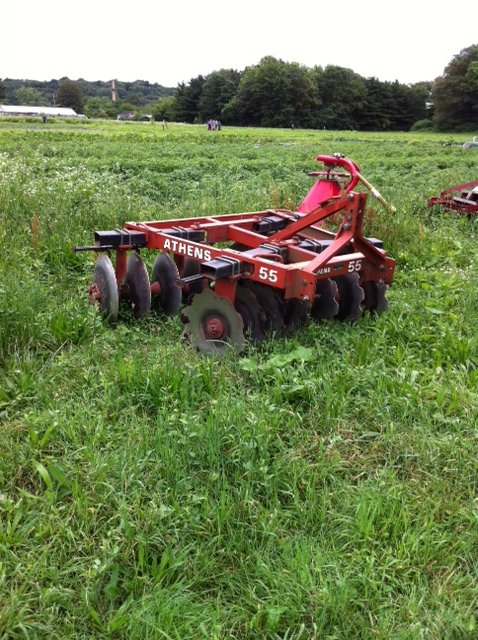
It is interesting for me, after a year of being mostly away from the farm after the birth of my daughter Sadie, to notice which of our farm's large collection of tools feel particularly useful during this peak season. Some are old friends: the shade cloth that covers our greenhouse in the heat of the summer is the only reason we are able to germinate and grow lettuce transplants for our summer successions. Some are new purchases: our Schaper Brothers fertilizer spreader, built for us by hand in Pennsylvania this spring, has helped us eliminate the "hate labor" of pushing a heavy hand spreader over uneven field surfaces for hours at a time, one of my least favorite jobs when I was pregnant (or, really, at any time on the farm). Some are incidental purchases that turn out to be incredibly useful: our new cultivating tractor, which we've affectionately named "Li'l K", since it's the smaller of our farm's two Kubotas, happened to come with a three-point-hitch mounted rear cultivator that turns out to be almost the perfect tool for cultivating plastic pathways, though it's not for the faint of heart. Some are unexpectedly valuable far beyond their cost in dollars: a six-hundred-dollar mini-chisel plow, which can fit in the back of our pickup truck, has reshaped our tillage regimen, helping us make beds more quickly while minimizing compaction and soil layer inversion in our fields. Our tractor-mounted boom sprayer, despite its idiosyncracies, saves us hours and hours of time with a backpack sprayer applying fish emulsion or organic pesticides when we need to. And the funny little fertilizer injector that sends fish, kelp and micronutrients directly through the drip irrigation lines to the roots of the plants, which cost us less than $200 a couple of years ago, may be one of the most effective and important tools on the farm, though you may miss it if you walk around the fields.
Because labor is by far the biggest cost on our farm, when tools that are supposed to save us labor work the way they should, we feel it acutely -- we're able to direct our precious person-hours to tasks that no equipment can do as well as human hands. Hand weeding carrots and parsnips can't be avoided, despite our best efforts with the cultivating tractors and the flame weeder. Harvesting is highly skilled work that takes training and practice to perfect. And we haven't been able to find any machine that can pound posts or tie tomatoes.
Our farm is a funny size -- at eleven acres, we're big enough that wise purchases of equipment can have a big impact on our productivity, but we still require a large crew of people to make it all happen. Being able to afford all this -- both the ongoing development of our fleet of tools and the development of an efficient and manageable staffing model -- is something that is on our minds every day, even during this peak season. After seven years at Waltham Fields, I feel like these complex interactions between equipment and people are still one of the fascinating puzzles that make farming a constant learning process.
Meanwhile, the sun is shining, the weeds are growing, and it's time to get back to work. Enough chatter. Stay cool, everyone.
-- Amanda, for Andy, Erinn, Dan, Larisa and Lauren
July may be the busiest time of year on our farm. We have quite a bit of seeding and transplanting of fall crops to do, and while it's not as many beds as the huge planting push of April and May, it's combined with ever-increasing harvests and other tasks, like cultivating, weeding, dealing with insects and diseases, and tying tomatoes, that make these weeks feel like the very peak of the roller-coaster ride of the season. Before July, it's plant, plant, plant. After July, it's harvest, harvest, harvest. For these brief four weeks in July,it's try to get it all done at once, hang in there and enjoy the ride. Ice cream helps with this.
It is interesting for me, after a year of being mostly away from the farm after the birth of my daughter Sadie, to notice which of our farm's large collection of tools feel particularly useful during this peak season. Some are old friends: the shade cloth that covers our greenhouse in the heat of the summer is the only reason we are able to germinate and grow lettuce transplants for our summer successions. Some are new purchases: our Schaper Brothers fertilizer spreader, built for us by hand in Pennsylvania this spring, has helped us eliminate the "hate labor" of pushing a heavy hand spreader over uneven field surfaces for hours at a time, one of my least favorite jobs when I was pregnant (or, really, at any time on the farm). Some are incidental purchases that turn out to be incredibly useful: our new cultivating tractor, which we've affectionately named "Li'l K", since it's the smaller of our farm's two Kubotas, happened to come with a three-point-hitch mounted rear cultivator that turns out to be almost the perfect tool for cultivating plastic pathways, though it's not for the faint of heart. Some are unexpectedly valuable far beyond their cost in dollars: a six-hundred-dollar mini-chisel plow, which can fit in the back of our pickup truck, has reshaped our tillage regimen, helping us make beds more quickly while minimizing compaction and soil layer inversion in our fields. Our tractor-mounted boom sprayer, despite its idiosyncracies, saves us hours and hours of time with a backpack sprayer applying fish emulsion or organic pesticides when we need to. And the funny little fertilizer injector that sends fish, kelp and micronutrients directly through the drip irrigation lines to the roots of the plants, which cost us less than $200 a couple of years ago, may be one of the most effective and important tools on the farm, though you may miss it if you walk around the fields.
Because labor is by far the biggest cost on our farm, when tools that are supposed to save us labor work the way they should, we feel it acutely -- we're able to direct our precious person-hours to tasks that no equipment can do as well as human hands. Hand weeding carrots and parsnips can't be avoided, despite our best efforts with the cultivating tractors and the flame weeder. Harvesting is highly skilled work that takes training and practice to perfect. And we haven't been able to find any machine that can pound posts or tie tomatoes.Our farm is a funny size -- at eleven acres, we're big enough that wise purchases of equipment can have a big impact on our productivity, but we still require a large crew of people to make it all happen. Being able to afford all this -- both the ongoing development of our fleet of tools and the development of an efficient and manageable staffing model -- is something that is on our minds every day, even during this peak season. After seven years at Waltham Fields, I feel like these complex interactions between equipment and people are still one of the fascinating puzzles that make farming a constant learning process.
Meanwhile, the sun is shining, the weeds are growing, and it's time to get back to work. Enough chatter. Stay cool, everyone.
-- Amanda, for Andy, Erinn, Dan, Larisa and Lauren
Friday, July 1, 2011
Notes from the Field: Our 2011 Assistant Growers
I... am... not... going... to... talk... about... the... weather. OK, yes I am, a little. We did need the rain. I admit it, I did say that. And when the forecast called for a quarter to a half an inch, I thought that would be pretty good. But we got almost 2 inches last Wednesday, then another inch and a quarter over the next three days. Well, you know that -- you were there. But really, it was a lot of water. So much water, combined with those cool temperatures, puts us uncomfortably in mind of 2009, when a wet, cool early summer led to some devastating disease pressure later in the season. We're hoping that history will not repeat itself so soon, and that this water and cool temperatures will only lead to slightly delayed squash and cucumbers and beautiful greens for another week.
But enough about that -- more about our farm crew.
Larisa and Lauren
Each year, we are fortunate to work with a few people who are passionate about becoming farmers and are at a point in their careers where our operation can be useful to them. Our assistant growers, who work the entire growing season with Waltham Fields, are a critical part of our farm team. They drive tractors, pound stakes, pull weeds, transplant and seed crops, harvest and harvest and harvest, and manage CSA distributions. Many of our past assistant growers are now farmers in their own right (check out our "where are they now?" page for some stories). This year's AGs, Lauren Weinberg and Larisa Jacobson, are as fine a pair as we have had on our farm.
Lauren comes to us from her recent work at Adamah, a farm and fellowship program at the Isabella Freedman Retreat Center in Connecticut. She had many roles at Adamah, including the Sap Queen, Pickle Apprentice, and Field Apprentice, all of which have contributed to her wide knowledge about food production and preservation. While she had never driven a manual transmission vehicle, let alone a tractor, before she came to WFCF, she had made more kim chee and sauerkraut than many of us have ever seen -- in a kosher kitchen where goat yogurt and chevre shared space (but never utensils) with 50 gallon barrels of pickling crops. We appreciate Lauren's thoughtfulness and thoroughness on the farm, along with her appreciation of the beauty and the spiritual side of the work that we do.
Larisa was most recently at UC Davis, where she completed a master's degree in International Agricultural Development and spent time working on biodigester projects in Guatemala, along with teaching and working on the student farm at Davis. She has tons of "secret" skills and knowledge, including welding, fiddle playing, assembling cultivators from miscellaneous parts, and community organizing, among others. She won us over in her application with her vivid description of hitting an irrigation upright with the loader bucket of her tractor -- and fixing it, possibly the only time when a farm equipment accident has led directly to someone getting an interview on our farm. Despite this story, Larisa is a skilled equipment operator who is getting the hang of all the big and little pieces that help our farm go. Her sense of humor and intense work ethic also come in handy.
In addition to our assistant growers, our farm team is rounded out by our field crew, who start next week (more about them later) and a group of work sharers who staff our CSA pickups, make sure our CSA newsletter is legible and functional, take care of our perennial herb and flower garden, and help us in the fields. They each have fascinating stories as well, and histories with the farm -- some long, some short, but all wonderful. We could not do this without them.
-- Amanda, for Andy, Erinn, Dan, Larisa and Lauren
But enough about that -- more about our farm crew.
Larisa and Lauren
Each year, we are fortunate to work with a few people who are passionate about becoming farmers and are at a point in their careers where our operation can be useful to them. Our assistant growers, who work the entire growing season with Waltham Fields, are a critical part of our farm team. They drive tractors, pound stakes, pull weeds, transplant and seed crops, harvest and harvest and harvest, and manage CSA distributions. Many of our past assistant growers are now farmers in their own right (check out our "where are they now?" page for some stories). This year's AGs, Lauren Weinberg and Larisa Jacobson, are as fine a pair as we have had on our farm.
Larisa was most recently at UC Davis, where she completed a master's degree in International Agricultural Development and spent time working on biodigester projects in Guatemala, along with teaching and working on the student farm at Davis. She has tons of "secret" skills and knowledge, including welding, fiddle playing, assembling cultivators from miscellaneous parts, and community organizing, among others. She won us over in her application with her vivid description of hitting an irrigation upright with the loader bucket of her tractor -- and fixing it, possibly the only time when a farm equipment accident has led directly to someone getting an interview on our farm. Despite this story, Larisa is a skilled equipment operator who is getting the hang of all the big and little pieces that help our farm go. Her sense of humor and intense work ethic also come in handy.
In addition to our assistant growers, our farm team is rounded out by our field crew, who start next week (more about them later) and a group of work sharers who staff our CSA pickups, make sure our CSA newsletter is legible and functional, take care of our perennial herb and flower garden, and help us in the fields. They each have fascinating stories as well, and histories with the farm -- some long, some short, but all wonderful. We could not do this without them.-- Amanda, for Andy, Erinn, Dan, Larisa and Lauren
Subscribe to:
Posts (Atom)